Dear Aquarist,
President
FIRST ANNUAL PHOTO CONTEST – Take your best shot!
Deadline – September 30th, 2013
Freshwater Categories:
Saltwater Categories
SPONSORS (Thank YOU):
Aqueon
Coralife
Kent Marine
Hikari
Seachem
PRIZES – From Sponsors Above – Thank you!
Freshwater Categories:
Best Aquascape
Best Nano Aquarium (2 ½ – 10 gallons)
Best Med-sized aquarium (15 – 40 gallons)
Best Large aquarium (50 + gallons)
Spectacular Freshwater Fish
Most Fabulous Plant
Most Amazing Freshwater Invert
Best Freshwater Photo (any category)
Spectacular Cichlid
Saltwater Categories
Best Aquascape
Best Nano Aquarium (2½ – 10 gallons)
Best Med-sized aquarium (15 – 40 gallons)
Best Large aquarium (50 + gallons)
Spectacular Saltwater Fish
Most Breathtaking Corals Reefs
Most Amazing Saltwater Invert
Best Saltwater Photo (any category)
OFFICIAL CONTEST RULES
No purchase or payment necessary to enter or win
HOW TO ENTER
The 1st Brooklyn Aquarium Photo Contest will be announced June 14th, 2013 at the monthly Society’s meeting, all entries will be accepted until September 30th, 2013. The results of the Contest as well as the award ceremony will take place on October 11th at the Society’s monthly meeting. Digital photos must be submitted to BROOKLYN AQUARIUM SOCIETY YAHOO GROUP in JPEG format. Photos submitted must be 6 MP (mega pixel) or greater. As a condition of registration, you will be required to click where indicated to signify that you accept and agree to be bound by these Official Rules. With each submission, participants must include the following: 1) Name of Photographer, 2) Address of Photographer, 3) Phone Number, 4) Email, 5) Category of Freshwater or Saltwater photo is to be entered, 6) Scientific and Common Name of Subject in Photo.
> Brooklyn Aquarium Society @ Yahoo Groups < Submit your photos here.
Photo Eligibility
To enter, you do not have to be a member of the Brooklyn Aquarium Society or a member of the BAS Forum, contest is open to all, no age restrictions. BAS judging individuals and their immediate family are not eligible. BAS non-members taking part in the Contest and winning a prize for any of the 17 categories will receive a free 1 year membership to BAS. Entries that fail to comply with the Official Contest Rules will be disqualified.
Image Modifications
Minor digital enhancement is permitted, but images that have been significantly modified or appear unnatural will be disqualified.
Number of Entries
An individual may submit a maximum of 3 photos per category, any category.
Photo Subject Restrictions
Photos must be appropriate for category entered. Photos unrelated to the contest or of questionable content will not be considered. BAS retains sole discretion as to what constitutes appropriate content. Photos must not contain people or other objects other than the subject for the category entered.
Deadline
Contest ends midnight September 30th, 2013. Any late entries will not be considered.
Judging
Entries will be judged on the basis of photographic quality, and effectiveness in conveying the beauty and/or unique character of the object in their respective categories. A panel of judges consisting of representatives of the Contest’s sponsors as well as members of the BAS Board will judge the entries and all contest decisions are final.
Winners
The judging panel will select 17 winning entries (one per category). Winners and all prizes will be announced and presented during the BAS October 11th 2013 meeting. Any winner not able to attend the October 11th 2013 meeting, the prize will be kept at BAS until the December 13, 2013 meeting. If the winner/s fails to collect the prize as mentioned earlier, the prize/s will be auctioned at the January 10, 2014 meeting.
Photographer/Copyrights
Entries must be submitted by the original photographer. Do not submit a photo taken by someone other than yourself. You must be the sole owner of the image submitted. By submitting your photo, you guarantee that you are the author and copyright holder of the photo. By submitting, the contestant waives all rights upon submission and therefore has no recourse whatsoever in the use of the photo.
Additional Terms and Conditions
BAS is not responsible for computer system, hardware, software, or program malfunctions or other errors, failures, or delayed computer transactions or network connections that are human or technical in nature. Furthermore, BAS is not responsible for: (i) lost, misdirected, misplaced, illegible, unintelligible, incomplete, or late entries or (ii) any act, failure to act, or delay regarding the transmitting or processing of entries. BAS reserves the right, in its sole discretion, to cancel or suspend all or any portion of this contest without notice. BAS is entitled to interpret these rules as needed and its decisions are final. BAS reserves the right to disqualify any entrant that BAS has reason to believe is not the original work of entrant, or does not otherwise meet the contest rules.
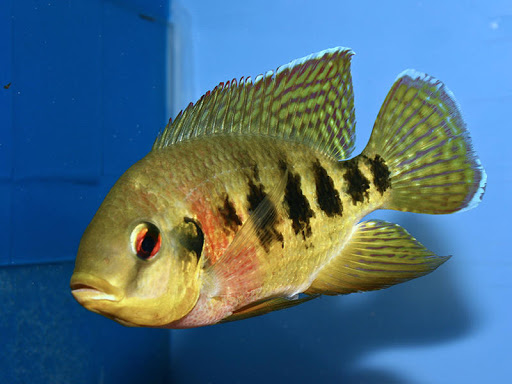
TILIPIA MARIAE
by Joe Graffagnino
This beautiful yellow and green cichlid from Africa would be a great addition to any aquarium. The Tilipia Mariae, also known as Tiger Tilipia and Tilipia Marie, is not your average African cichlid. It is not well known or a publicized aquarium fish and that is why it’s not easy to acquire, but more about this later. Continue reading Tilipia Mariae
We will once again be having a 50/50 split on donated livestock only (corals, fish and plants in good health) for members only. Members must sign in at the donation desk that they want 50% of whatever their livestock items are auctioned for (no reserves). The total of all donations must be greater than $5 and your return check will be available for pickup at the next regular meeting.
If you have any questions regarding this event please don’t hesitate to contact us or just post your questions below.
Not a member yet? No problem, become one today http://membership.basny.org/
Thanks to The Brooklyn Zoo for their generous donation and their continued support to the Brooklyn Aquarium Society.
Please visit their website at http://brooklynzooandaquarium.com/
Remember to show them your BAS membership card to both show your support and get additional discount.
Once again, thank you!
Dear members,
It is with deep regret that we must cancel our February 8th “Ponds; the easy way” by Kathy Cardineau event due to severe storm warning for our area.
Please note that there will be NO meeting tonight. The next meeting is scheduled for March 8th, 2013 and will feature Kevin Kohen of LiveAquaria.com
The 50/50 split for livestock only will be at our March event.
For a complete list of upcoming events please kindly visit Our Events
Please download the latest copy of The Aquatica and our Bulletin for your reading pleasure.
P.S. Everyone who has received a bottle of STARTSMART COMPLETE for either fresh or marine aquariums please send your product evaluation to the our P.O. Box or email it to me at JoeGraffagnino [at] yahoo.com.
Stay warm and safe,
Joe
President
All,
It is with sadness and regret that I must cancel the Brooklyn Aquarium Society meeting for this Friday November 9. Due to Hurricane Sandy the NY Aquarium will be closed until the Spring.
The Education Hall is being used for volunteers working to repair the aquarium. Any person seeking to volunteer to work as a laborer to help the wildlife survive at the NY Aquarium please go to the Facebook page or the web site of the Wildlife Conservation Society and leave information that you want to volunteer at the NY Aquarium. Someone will contact you.
We hope to see you at the Holiday Party on Dec. 14. I am not sure where it will be but I will let you know.
Joe Graffagnino
President
Breeding Anabantoids with emphasis on Bettas
Anabantoids are extremely interesting fish. Most anabantoids go through great lengths to prepare a nest site, attract a suitable mate and then place the fertilized eggs into the nest. After the fry hatch generally it is the father that cares for the fry and he chases mom away. As the children start to leave the nest, to explore their surrounding area, dad is kept very busy in protecting the fry, even to attack the hobbyist hand if it gets too close to the nest. You can feel the frustration on the harried father as the little fry start darting away from home. He must try to eat to sustain his strength and health, protect and recapture his fry and spit them back into the nest continuously. It is no wonder that after several days of this hectic activity that he starts to cannibalize his offspring. I’m sure that many of us have thought the same with human offspring – remember the terrible two’s?
I deviate from the story. Anabantoids can be separated into three distinct classes:
The bubble nest builders I have found to be the easiest to spawn. Bubble nest builders build their nest to impress and attract a female to spawn with them. I generally have a Styrofoam cup cut vertically so the long side is now in half. I let that sit in a shallow tank, such as a 10 gallon with 6 – 9 inches of water at neutral pH (7.0) and a temperature of 80 degrees Fahrenheit. Water in Brooklyn comes from the tap soft (3-4GH) and neutral pH. Add floating plants such as duck weed and fairy moss so the fish can use the plant to anchor his bubble nest together.
At this point the male becomes very aggressive. He would even attack your hand or finger should it enter his territory. I keep the female in a small, clear glass container with the top of the container a few inches above the water line, in the same tank as the male, at the opposite side of his bubble nest. When the nest is complete and the females’ abdomen has become full with eggs, it is time to release her into the tank. Within a couple of hours the breeding should begin. One method to know if the female has eggs in her is after feeding them a diet of live or frozen food such as black or blood worms for 5 continuous days, don’t feed her for a couple of days. If she still has a round stomach area then its eggs. After spawning the female should be removed from the aquarium to protect her from the male and to help her recuperate from her strenuous ordeal. Within a few days the male will start chasing the fry that are hatching from the nest. He wants to keep them in his nest. At this point I would remove the male and place him into a separate tank from the female.
Allow the fry to grow in their original aquarium. It is important to have the same water parameters for the male and female as was in the spawning tank. Also the surface air temperature cannot deviate more than 3 degrees Fahrenheit from the water temperature, for when the fry come up for their first gulp of air they could catch pneumonia. The fry will grow very quickly on baby brine shrimp (live or frozen). Depending on how many fry you want to keep it would pay to start moving the fry to grow out tanks after their first month or for many of them their growth would become stunted.
Species that are submerged plant nest builders are more difficult mainly because you normally can’t see the nest and if there are fry in it. The usual method of noticing a successful breed is when you start seeing fry moving around the tank. Problem with this is that the parents may eat them and if there are other fish in the tank they will definitely eat them. Fish of this type generally like slow moving water and that the water is more acidic (4.5-6.5 pH). African centopomas fall into this category. I accidentally found a betta brownorum nest inside a submerged 35mm film canister.
Mouth brooders such as betta macrostoma utilize this type of spawning behavior. Breeding takes place between one pair of fish. When the female is gravid she initiates the mating process. The male wraps himself around her and squeezes the eggs from her while simultaneously fertilizes them with his milt. I have seen the female recover the eggs and at times the male will also recover eggs and while both fish face each other she will spit the egg into his mouth. Both betta channoides and albimargineta the female gathers the eggs in her mouth and spits them up over her head where the male is positioned to catch them. The male then holds the eggs until they hatch and he will release them from 14 to 28 days, depending on the species.
Anabantoids are beautiful and amazing fish. If the hobbyist wants to experience a different type of spawning behavior I highly recommend them getting a group of anabantoids.
Dear members,
Month after month, the Brooklyn Aquarium Society continues to bring you great speakers, auctions, aquarium books and supplies. We even maintain two publications to help everyone become better hobbyists. This is hard work that all of us chip in to make possible, but it costs time and money.
The only way we can continue with the high standards we have been maintaining for the past 101 years is by generous donations from manufacturers, stores, and members. We have many members that continue to bring us donations to our monthly auctions.
Donations can mean fish, plants, other live stock, old tanks, filters, aquarium equipment: pretty much anything that you have no further use for (but is in good working order). Remember, one man’s unused or unwanted item is another man’s treasure. So dig deep in the back of those closets. I know there are aquarium items you don’t use anymore. If you have bred fish, propagated coral or plants and can spare some, that will be greatly appreciated.
Please notify any Board member and we will contact you.
Steven Matassa
First Vice President
2012-2013 BAS Sponsor Calendar –
For a list of our upcoming event please visit “Our Events”
You can now download/view/print your own copy of Sponsor Calendar. See all area events happening each month at BAS and all sister societies around the tri-state area.
Many thanks to our board member Gene Kogan for creating this nifty calendar.
Enjoy, and let us know (by leaving a comment below) if you’d like to see something included/changed.
2012
September 2012 | October 2012 | November 2012 | December 2012
2013
January 2013 | February 2013 | March 2013 | April 2013 | May 2013